
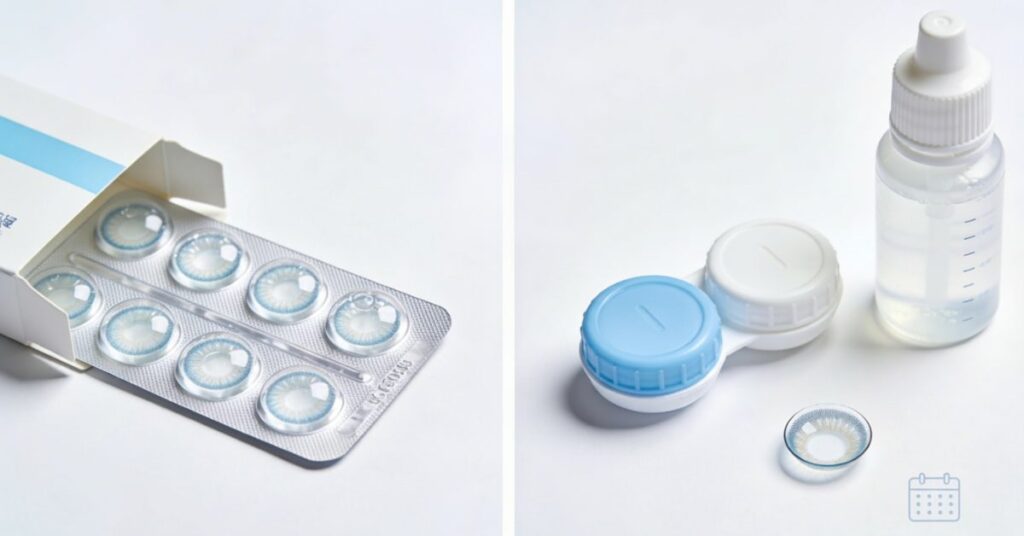
When it comes to choosing contact lenses, one of the biggest decisions you’ll face is whether to go with daily disposable contacts or monthly lenses. Both options have their advantages, and the right choice depends on your lifestyle, budget, and eye health needs.
If you’re new to contacts or even if you’ve worn them for years, you may not realize just how different daily vs monthly contact lenses can be. Understanding the pros and cons of each can help you make the best decision for your eyes.
What Are Daily Contact Lenses?
Daily disposable contacts, often called “dailies,” are lenses designed to be worn once and then thrown away. Each morning you open a fresh pair, wear them throughout the day, and discard them before going to bed.
Because they are never reused, daily lenses eliminate the need for cleaning or disinfecting. You don’t need to buy bottles of solution or worry about protein buildup over time. For many people, this makes dailies the most convenient option.
Key Features of Daily Contacts
- Worn for one day only
- No cleaning or storage required
- Lower risk of contamination and infection
- Often thinner and more breathable than monthlies
- Slightly higher cost over time compared to monthly lenses
What Are Monthly Contact Lenses?
Monthly contacts are designed to last for up to 30 days, as long as they’re properly cared for. You put them in each morning, take them out at night, and store them in fresh lens solution until the next day.
Because they’re reused, monthly lenses are thicker and more durable than dailies. They are often recommended for people who wear contacts every single day and want a more cost-effective option.
Key Features of Monthly Contacts
- Worn everyday for up to 30 days
- Require nightly cleaning and storage
- More affordable on a per-month basis
- Available in a wider range of prescriptions and specialty designs
- Higher risk of buildup and infection if not cared for properly
Daily vs Monthly Contact Lenses: Side-by-Side Comparison
Let’s break down the main differences between daily and monthly lenses so you can see how they stack up.
1. Convenience
- Daily lenses win here. You don’t need to worry about cleaning, cases, or solution. Just wear and toss.
- Monthly lenses require a nightly routine—removing, rubbing, rinsing, and storing them properly.
2. Eye Health & Safety
- Daily lenses carry a lower risk of infection since you start with a sterile pair every day. There’s no time for bacteria to build up.
- Monthly lenses are safe when cleaned properly, but skipping steps or reusing solution increases the chance of irritation or infection.
3. Comfort
- Dailies are typically thinner and made with more breathable materials, which many wearers find more comfortable. They’re especially good for people with sensitive or dry eyes.
- Monthlies are thicker and may feel less breathable, though some people prefer the stability they provide.
4. Cost
- Daily lenses usually cost more overall because you use a new pair every day. Over the course of a year, the expense can add up.
- Monthly lenses tend to be more budget-friendly since you only use 12 pairs a year instead of 365. However, you’ll need to factor in the cost of solution and cases.
5. Lifestyle Fit
- Dailies are ideal for busy people, frequent travelers, or those who only wear contacts occasionally (like weekends or special events).
- Monthlies work best for people who wear contacts every day and don’t mind the nightly cleaning routine.
Who Should Choose Daily Contacts?
They are a great option if:
- You want the most hygienic and low-maintenance choice.
- You have sensitive eyes or allergies and need a fresh, deposit-free lens every day.
- You don’t want to bother with cleaning or carrying a solution.
- You only wear contacts part-time (like just for sports, social events, or weekends).
Many eye doctors recommend dailies for children, teens, or first-time wearers because the simplified routine makes them easier to manage.
Who Should Choose Monthly Contacts?
Monthly contacts may be the better fit if:
- You wear contacts every single day and want to save money.
- Your prescription requires specialty lenses (toric for astigmatism, multifocal for presbyopia, etc.), which are more widely available in monthly formats.
- You don’t mind cleaning and storing lenses as part of your everyday routine.
- You want a sturdier lens that may handle longer wear times.
Some monthly contacts are even FDA-approved for extended wear, meaning you can sleep in them for several nights in a row. However, this should only be done under your eye doctor’s guidance, as overnight wear increases infection risk.
What About Bi-Weekly Lenses?
It’s worth mentioning that bi-weekly contacts are another option. These lenses are replaced every two weeks and offer a middle ground between daily and monthly wear. They require cleaning like monthlies but reduce the buildup time by half. For some wearers, this balance of cost and hygiene works best.
Cost Considerations
One of the biggest deciding factors is cost. While daily lenses tend to cost more upfront, they also don’t require a solution or cases, and they lower the chance of costly complications from poor hygiene.
Monthly lenses save money per lens but require ongoing investment in cleaning supplies. If you’re diligent about care, the savings can be significant over time.
Here’s a quick example:
- Dailies: Around 365 pairs a year (or fewer if worn occasionally).
- Monthlies: 12 pairs a year + bottles of solution + lens cases.
The actual numbers depend on your prescription, brand, and insurance, but in general: dailies are more expensive, monthlies more budget-friendly.
Eye Doctor Recommendations
Ultimately, the choice between daily and monthly contacts should be made with your eye doctor. Factors such as the health of your cornea, tear film, prescription strength, and lifestyle all play a role. Some people even use both—wearing monthlies most of the time but keeping a box of dailies on hand for travel, swimming, or sports.
Your doctor may also recommend one type over the other if you have a history of dryness, allergies, or infections.
FAQs
Are daily contacts healthier than monthly ones?
Yes, in general. Dailies reduce the risk of infection because you start with a fresh, sterile pair every day.
Can I wear monthly contacts longer than a month?
No. Even if they feel fine, monthly lenses should be discarded after 30 days to avoid buildup and contamination.
Are daily contacts worth the extra cost?
For many people, yes. The convenience, comfort, and safety of a fresh lens every day outweigh the price difference.
Can I switch from monthly to daily contacts?
Yes, but only under your eye doctor’s supervision. They’ll make sure your prescription and eye health are compatible with the switch.
Final Thoughts
The choice between daily vs monthly contacts isn’t one-size-fits-all. Daily disposables offer unmatched convenience, hygiene, and comfort, making them ideal for people who prioritize ease of use. Monthly lenses, on the other hand, are cost-effective, widely available, and work well for those committed to a cleaning routine.
Whichever you choose, the most important factor is proper care and following your doctor’s advice. Safe habits keep your eyes healthy, your vision clear, and your contact lens experience comfortable.
Ready to explore your options? Shop top brands of daily and monthly contact lenses at Contact Lens Marketplace and find the perfect fit for your lifestyle.